Nada's Door

Updated: Aug 28
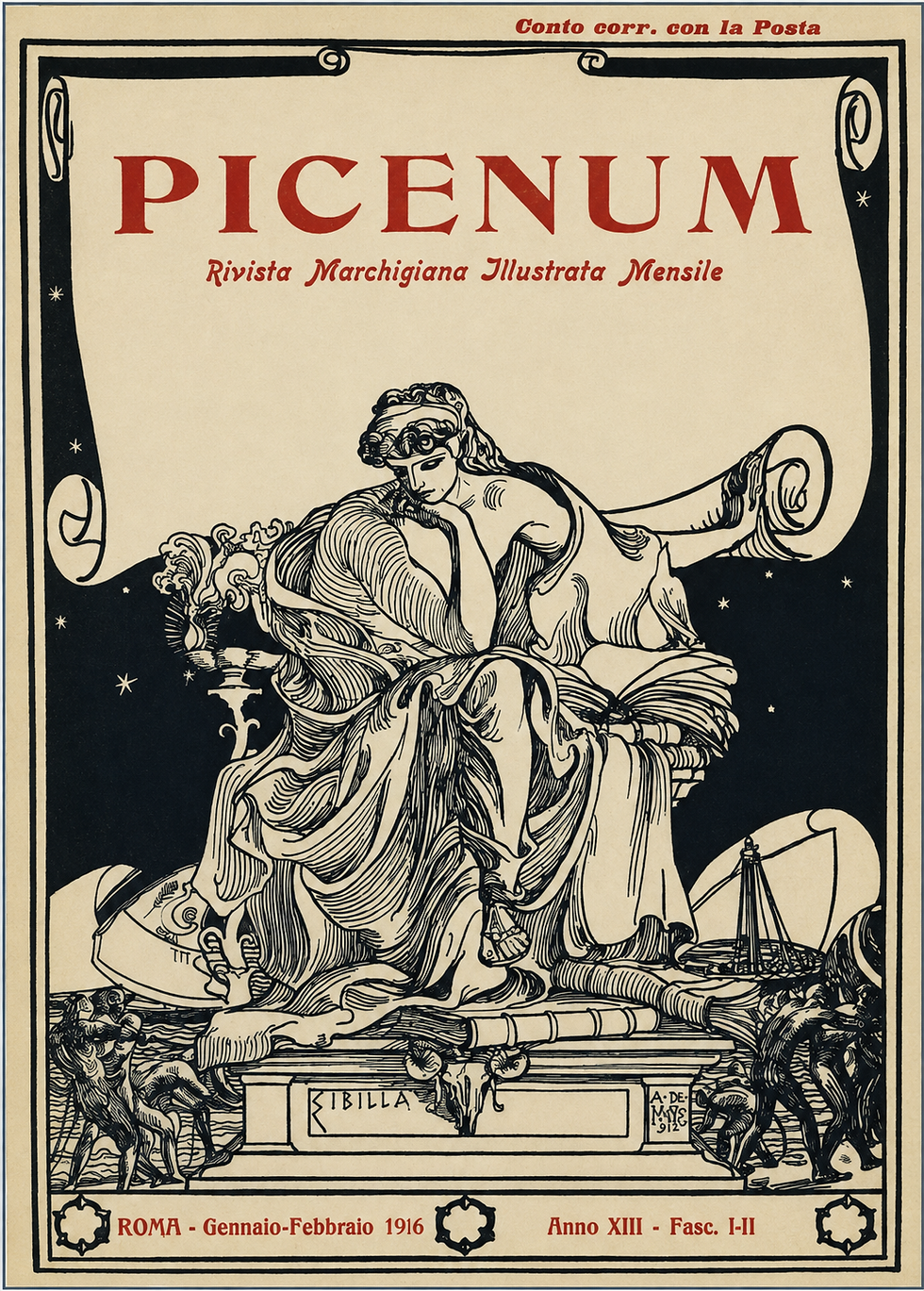
I’ve spent the last six years of my life hunting for Nada.
When my grandmother died, I gave myself permission to try to find her. I loved my grandmother, and I didn’t want to disappoint.
“Don’t open this door,” she’d said. “Non se ne parla.” We don’t talk about that.
I knew Nada was on the other side.
When my grandmother died, I gave myself permission to get to know her. But with my grandmother gone, I could no longer open the door. If I looked through the keyhole, I could just manage to see them both, but not fully make out either.
I needed to get to the other side.
Nada was my grandmother’s aunt. The aunt that nobody wanted to talk about. A lesbian, they said. The “L” word. An atheist. A journalist. A writer of forbidden words.
Through the crack in the door I could see her books, burning. Her brother had done it. My great-grandfather. My grandmother was daddy’s little girl.
It’s hard to not think about the door when someone tells you not to open it. So I looked through the keyhole, and it gave me a clue.
At first I looked online. Books and newspapers revealed more of what lay behind the door. “Not just a writer of forbidden words,” they told me. “A woman, tending to the wounded. A nurse, for three years, in the bloodiest war…”
But also a victim, her intimacy exploited. By a man who made millions from her story.
“That figures,” I thought.
And then she surprised me. The betrayal made her stronger.
She started a magazine. Powerful men, all wrote for her, her name above theirs. They marched to her offbeat tune. They wrote on command, and lied on command. And she held their work for ransom when they didn’t.
She haunted me. This woman I didn’t know.
I quit my job. I got on a plane.
Ridiculous. Who was I really looking for, anyway?
An unnamed instinct grabbed me by the hand.
“Nonna?” I asked.
But it didn’t answer. I don’t believe in ghosts.
Still, I went where it pointed, and where it pointed, with frightening precision, I found fragments. In her old home I found her picture, hiding in a drawer, waiting for my arrival.
“She has a face!” I yelled. She looked nothing like me, but still I felt like I knew her.
In Milan I found her predator, hiding in plain sight. In a letter.
“Show me your body,” he said. “Tell me where your hands have been. Tell me where your lips have been,” he told her. “And I will help you write a book.”
It had been sitting in an archive for over a hundred years, in the most perfect, looping cursive. It was as if he knew the words by heart. How come no one else had ever noticed?
In Naples I found her lover, where I least expected. Not in a newsroom or a brothel, but in a castle, long-forgotten, on a magnificent hill. Her lover was quiet, but the risqué books on her shelf made it plain who she really was.
She was painted chaste and pure and perfect, despite all the evidence I saw to the contrary.
“Make her human!” I begged, before leaving that place.
And in Rome… in Rome I found Nada’s file. The police were watching her.
“She’s not dangerous,” they said. “But we should watch her anyway. She’s too smart, too eloquent, too ambitious.”
And so they did. For thirty years.
Nada died in 1927. A good fifty years before I was born. What made me think I could save her?
I cry for her sometimes, still trapped behind that door. But I’ve seen enough that I can make out her profile.
“I can save her from oblivion,” I tell myself, while the instinct still pulls. I can fill her face in with adjectives that bring her back to life.
Opinionated. Petty. Brilliant. Ruthless. Loyal. Biting. Devious. In all her glory. Not a martyr, or a saint. She was just a woman.
And so am I.


Comments