A Certain Female Writer

Updated: Aug 28
My first inkling that there was more to Nada’s story came when I began reading the reviews of her book. Unable to get my hands on the book itself at that point in my research process, I was content to dig up the handful of contemporary reviews and modern academic analyses of the book so I could get a gist for what, exactly, was so scandalous about it. I of course assumed that my grandmother’s reticence to talk about her aunt, who by any measure had had an extraordinary amount of success as a female journalist, at a time when skirts were scarce among the editorial boards of the major dailies, had to do with the rumors about her sexual orientation.
But maybe there was more to it. There were, after all, several queer members of our family who she embraced despite her religious beliefs, and while she was prone to pretending that element of their life didn’t exist, she went on about her business like there was nothing to see here.
Then I found a little book from 1928, La Saletta d’Aragno, that helped me start building some context. I bought a copy from a bookstore in Italy, paying more for shipping than for the book itself. And then, once the book arrived in all its physical glory, I realized if I wanted to find Nada in it, I would have to read it. All three hundred pages of dense, early 20th century Italian.
My Italian is pretty good by any measure. My grandmother taught me when I was a teenager and several trips to Italy to visit family helped cement my learning. But it’s not native, and I certainly never spent any time reading Italian literature. The conversation with the family usually centered around where we were going for dinner that night, what was new in our lives since the last time we’d gotten together, how ridiculous the German tourists looked walking around naked at the beach… you know, nothing high brow.
But I managed to read it anyway, and in it I found one veiled mention that helped me crack one of the book’s biggest mysteries wide open.
The author, Adone Nosari, was a journalist, novelist, playwright and First World War aviator who had coincided with Nada on a surprising number of newspaper editorial teams. The book was a compilation of anecdotes about the crazy things that tended to happen at the Saletta d’Aragno - the back room of a cafe that was the beating heart of intellectual life in pre-World War I Italy.
One anecdote, about another forgotten writer - Giuseppe Vannicola - recounted how he had spent a lot of his own money in the summer of 1908 personally printing and distributing a review of Nada’s book at both the saletta and at La Fiorentina, a trattoria close by where intellectuals also tended to gather. Except he didn’t mention Nada by name. “A certain writer,” he called her, “who wrote a morbid and perverted book.”
She had been dead barely a year when Nosari’s book came out, and Nada had been his colleague for over two decades, as far as I could tell.
But I digress.

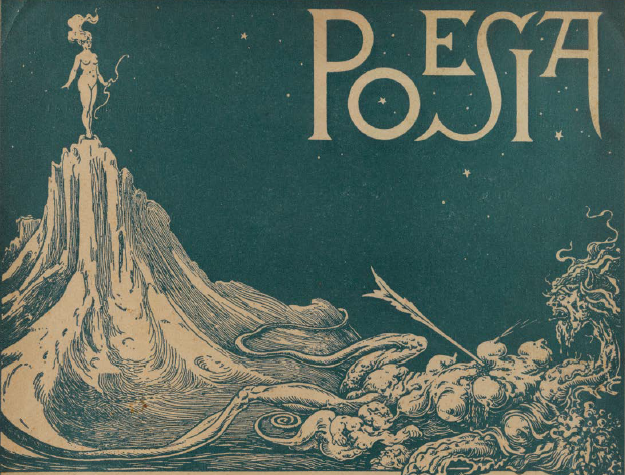
I managed to track down the unpublished Vannicola review, against all odds. And it was there that I discovered, to my surprise, that the cover for what I believed to be an erotic book about lesbian romance was designed by one of the most famous illustrators of Nada’s time: Giovanni Maria Mataloni.
You’ve likely never heard of him but I am willing to bet you have seen his work. He was one of the founding fathers of Italian art nouveau, and some of his designs are absolutely ubiquitous. When you think about the most famous, early nineteen-hundreds ads for brands of liquor, the kind that people hang up on their walls now as decoration, you are likely picturing some of Mataloni’s designs.
So - the book was important enough for one well-respected author to come out of pocket to print and distribute it after the dailies refused to publish, and consequential enough for a mega famous posterist to agree to design the cover.
Maybe this wasn’t a story about a flimsy erotic romance novel by an unknown country writer after all.


Comments